
The Coastside Astrophotographer's Field Guide: Santa Cruz to San Francisco
Six specific shooting sites along Highway 1, what they’re good for, and when the marine layer will ruin your night.
I’ve been shooting the San Mateo and Santa Cruz coast for long enough now to have developed a specific kind of grief about it. You watch the moon phase calendar for two weeks. You clear the Saturday. You pack the car at sunset, drive 45 minutes down Highway 1, pull into your spot and find a wall of fog so thick your headlights bounce back at you. You retreat inland up Highway 84, hoping to gain enough elevation to break above the layer, and salvage what you can.
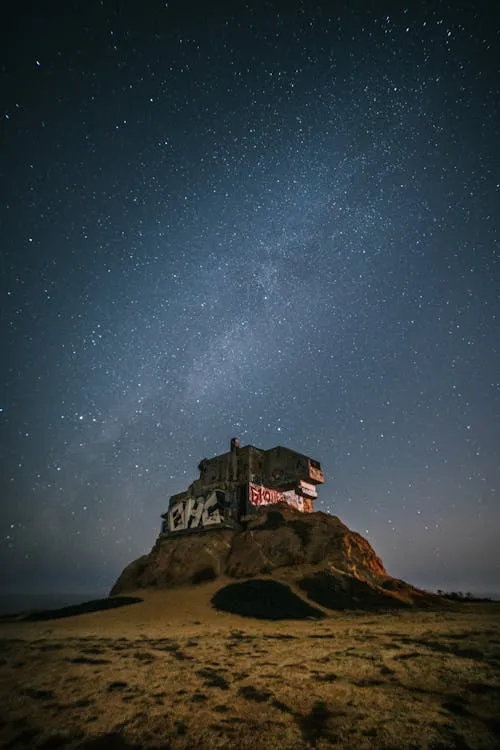
After enough of these nights you stop fighting the coast and start reading it.
The 70 miles of Highway 1 between Santa Cruz and San Francisco contain more usable astrophotography sites than people realize. None of them are dark-sky preserves and by my estimate, the best of them sit around Bortle 4, which puts them roughly two classes worse than the Eastern Sierra and about one class better than the South Bay. All of them require understanding marine layer behavior and the light dome geometry of three major metros pressing in from the east. But on the right night, with the right site choice, you can get genuinely good work done within an hour of the city.
What follows are six sites I shoot regularly, ordered south to north along the corridor. These aren’t rankings. They’re tools, each suited to different conditions and different goals.
The marine layer matters more than the Bortle map
Before any of this is useful: half the time the immediate coast is fogged in, and there’s no clever site selection that beats checking the sky before you drive.
May through September, the marine layer parks itself nightly on the coast. Late fall through early spring is prime coastside season when it’s drier, clearer, less fog, but cold enough that hand warmers in your camera grip become standard kit. The trick on any given night is reading where the layer’s top is. If it’s at 800 feet, you want to be at 2,000 feet (above it) or directly on the beach (below it, briefly, before the fog moves over you). Anywhere in the middle is the worst of both worlds and you’re in the soup with no way out.
I check Astrospheric and if the satellite shows a thick blanket from Half Moon Bay south, the coast is out, go inland and elevation-hunt instead.
I’ve gotten pushback that this is overkill for what’s supposed to be a hobby. The honest answer is that the gas, the drive time, and the opportunity cost of a clear new-moon night are too high to roll the dice. Ten minutes of satellite-checking saves a wasted three-hour round trip.
I’m building a tool that automates this analysis every evening a “is tonight worth it?” forecast specific to coastside sites. For now, it’s manual. Worth the ten minutes.
Bonny Doon / Empire Grade
Bortle ~4. Roughly 75 minutes from SF, 40 from San Jose. Elevation 1,800–2,200 ft. Forest-gap horizons. Pullouts only — no overnight camping at most spots.
Empire Grade Road climbs north out of Santa Cruz into the redwoods, and somewhere around the 1,800-foot mark you pop above the marine layer most nights it’s parked on the coast below. That’s the entire pitch for this site: when Highway 1 is socked in, Empire Grade is often clear and dark.
The cost is the forest. You’re shooting through windows between redwoods, which is either a beautiful compositional constraint or a frustrating limitation depending on your target. Wide-field Milky Way work with a redwood foreground is genuinely unusual in California astro and worth the trip on its own. Deep-sky on a specific target is harder, and you may spend 45 minutes scouting a pullout with the right horizon for what you’re imaging.
There are several known pullouts between Smith Grade and the Lockheed gate. I’ll leave it at that. This site doesn’t need more traffic at the marquee spots, and finding your own preferred pullout is part of working the area.
A few specifics that matter here. Mountain lions are real, not theoretical and there have been documented encounters in the broader Santa Cruz Mountains, and the redwood understory is exactly the kind of terrain where you don’t want to be wearing earbuds setting up gear in pitch dark. Cell coverage drops to nothing within a mile of leaving Santa Cruz; download offline maps before you climb. Post-CZU fire damage from 2020 still affects access in places so drive it in daylight first if you’ve never been.
My take: the best site in the corridor when the coast is fogged. Don’t burn it on a clear new-moon night when you could be at the actual coast.
Davenport bluffs
Bortle ~4. About 80 minutes from SF. Sea level. Wide-open south, west, and north horizons. Multiple roadside pullouts. No overnight.
This is one of the few places in the entire Bay Area where you get a true ocean-horizon Milky Way shot. The coast geometry north of Santa Cruz means the galactic core, when it’s up, rises over the Pacific rather than over land or city. That’s rare in California. Most coastal Milky Way work elsewhere on the West Coast looks south down the coastline; from Davenport you’re looking out at open ocean with the galactic plane arching over it.
Galactic core season runs roughly April through September here. The catch is that summer is exactly when the marine layer is most aggressive, so you’re hunting for the rare clear summer night with the core up and no fog at the coast. By my count I get maybe six to ten of these nights a year, and not all of them line up with new moon weekends. Plan accordingly.
A few hard-earned specifics. Park completely off the roadway. Highway 1 traffic moves fast even at 2 a.m., and the pullouts on the ocean side between Davenport proper and Scott Creek aren’t generously sized. CHP patrols this stretch and will check on parked vehicles. Have your story ready: astrophotography, here for a few hours, leaving by [time], and don’t block the lane.
Wind is the defining variable here. NW wind of 15 knots or more will shake any tripod that isn’t weighted, and salt spray will coat your front element within an hour. Bring microfiber cloths and check your front element between every set of frames. I’ve lost full sequences to spray I didn’t notice until I started processing.
The cliffs are unfenced and crumbling in places. Don’t set up close to the edge in the dark. Don’t even walk close to the edge in the dark. I’d argue this is the single highest-consequence safety call on the corridor, every season there’s at least one news story.
My take: worth the drive on the right night. One of two corridor sites I’d specifically recommend for galactic-core wide-field work.
Pigeon Point Lighthouse
Bortle ~4. Roughly 60 minutes from SF. Sea level. Lighthouse foreground. Pullouts on Highway 1. Hostel grounds are private property.
Every Bay Area astrophotographer eventually shoots Pigeon Point. There’s a reason: the geometry works, the lighthouse is photogenic, the access is easy, and the resulting image is instantly recognizable. It’s the iconic Bay Area astro composition.
So go shoot it. Once you have the shot, you’ll find yourself returning anyway, because the site is genuinely good, not just iconic.
A few practical notes specific to this site. The lighthouse beacon is now an LED replacement, not the original first-order Fresnel lens (which was retired in 2001 due to structural concerns with the tower), but it still sweeps across the scene at a regular interval. You can time your exposures around the sweep, embrace it as part of the composition, or stack out the bright frames in post. All three are valid; pick before you start so you’re not making the call at 1 a.m. with cold hands.
You will not be alone on a clear new-moon weekend, especially during galactic core season. Plan for company sometimes including landscape photographers running headlamps and occasionally light-painting the lighthouse, which will absolutely ruin a long-exposure stack. Be ready to coordinate, ask politely, or move to a different angle. The pullouts north and south of the point give you several composition options if the main parking area is busy.
The cliffs here are real. The hostel grounds south of the lighthouse are private; stick to the public viewing areas around the point itself.
My take: a corridor must. Go once, get the shot. Come back when you want it again, the composition is endlessly workable across seasons and conditions, and the lighthouse looks different every time.
San Gregorio State Beach area
Bortle ~4. About 45 minutes from SF. Sea level. Open western ocean horizon. Day-use parking lot closes at sunset; Highway 1 pullouts remain accessible.
San Gregorio sits at the junction of Highway 1 and Highway 84, which is what makes it strategically useful even when it isn’t otherwise exceptional. If the coast fogs while you’re set up, Highway 84 climbs east through La Honda toward Skyline you can be above the layer in 25 minutes without retracing your route home. That escape route earns this site a spot in the corridor rotation by itself.
On its own merits: a solid coast site with open western horizons, less crowded than Pigeon Point, and the closest real coast site to SF where the sky is genuinely worth shooting. It’s also often the first site to fog in when the marine layer moves. Check satellite imagery the hour before you arrive, not just the hour before you leave. I’ve watched it go from clear to whiteout in 20 minutes.
The Highway 84 junction is a sharp turn. Don’t park on the inside of the curve; pick a pullout with proper sight lines and walking room.
My take: convenient and useful, especially as a “I’ll start here and bail to Skyline if it fogs” site given the inland escape. Not the site I’d drive to specifically, but a smart choice when conditions are uncertain.
Devil’s Slide / Gray Whale Cove
Bortle ~5. About 25 minutes from SF. Sea level to ~200 ft. Open western and southern horizons. Parking at Gray Whale Cove State Beach lot. Devil’s Slide trail (the old Highway 1 alignment, now a paved walking path) accessible from north and south parking lots.
This is the corridor’s quick-trip site the one I shoot when you have three hours total, want real ocean horizons, and don’t want to commit to a longer drive. The sky isn’t dark enough for serious deep-sky work; you’re at the edge of the SF light dome and it shows up in your stacks as a gradient you’ll spend processing time fighting. But for wide-field Milky Way work with coastline foreground, the proximity-to-darkness ratio is excellent.
The reopened Devil’s Slide trail is an underrated asset. Walking the paved path north or south from the parking lots gives you elevated perspective over the coast and several composition options that aren’t reachable by car. Bring a headlamp with a red mode because the path is unlit and the cliff exposure is real once you’re off the pavement.
Wind funnels through the slide area. There’s often more wind here than at sites a mile north or south, which matters for tracking accuracy and tripod stability. I’ve had sessions ruined by gusts that weren’t forecast and weren’t an issue at Pacifica or Montara.
My take: practice site, quick-trip site, “test new gear without committing a whole night” site. Not a destination, but a workhorse that earns its place.
What I’m still figuring out
If you shoot this corridor and have corrections, additions, or field notes worth incorporating, email me. I update this guide quarterly and credit contributors. Let me know where I may have made any mistakes around site access changes faster than I can verify, and your boots-on-the-ground notes from last week beat my memory from last season.